
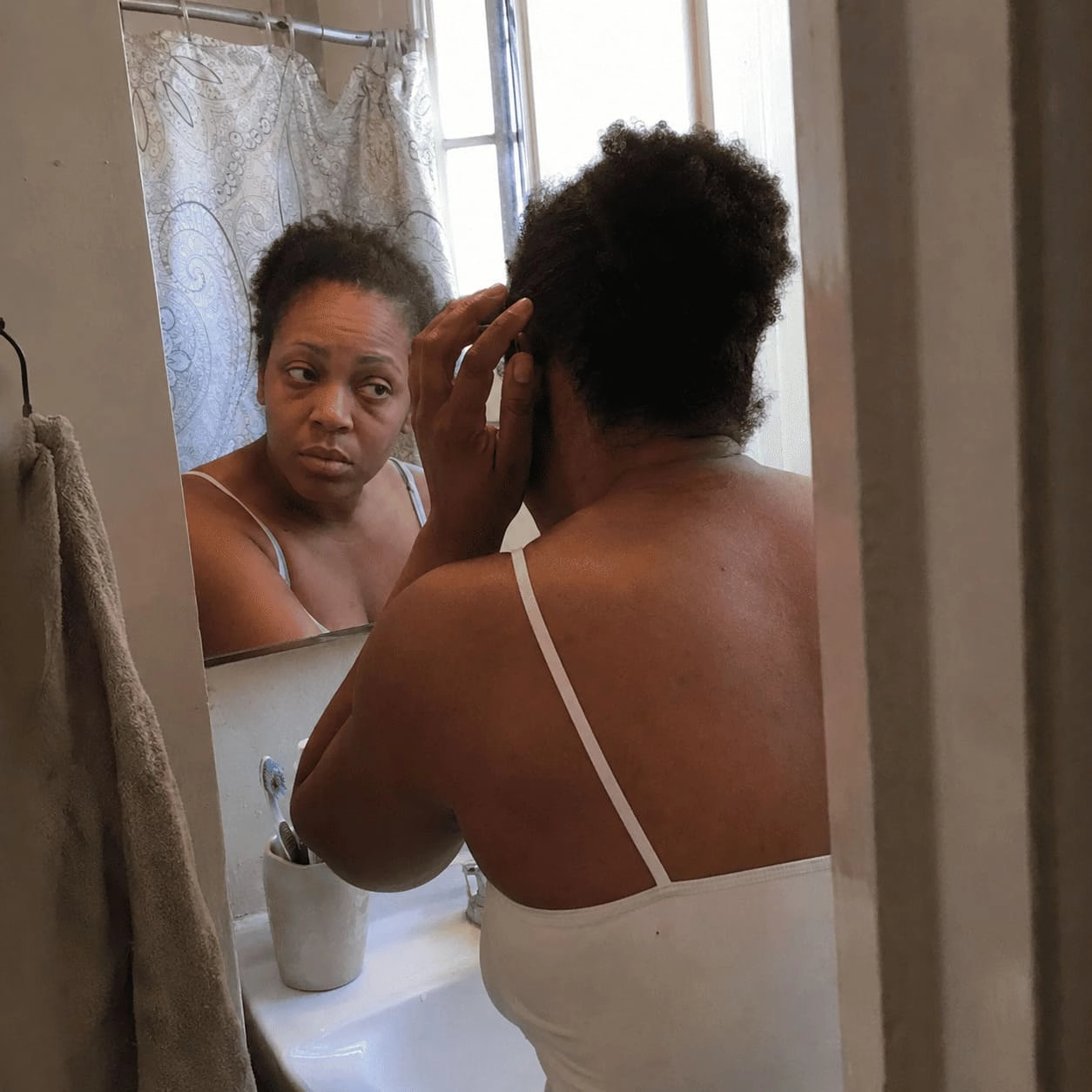
That's what Andrea told her sister four months ago.
She was at the bathroom mirror again - pushing her edges back with one finger, checking the same thinning spots she'd checked a hundred mornings before.
She'd said some version of it every wash day for years.
Lately, she just wasn't sure how much fight she had left.
Wash day wasn't a chore. It was most of the weekend.
Detangling alone took an hour per child. By the time she got to her own hair, late on a Sunday, her arms felt like concrete.
And she'd done everything right.
Protective styles. Weekly deep conditioning. Trimming her ends before they split. For years.
Her hair still broke at the same length. Her edges still thinned.
So she told herself it was just her hair type - some people are dealt good hair, some aren't. She'd made her peace with being the second kind.
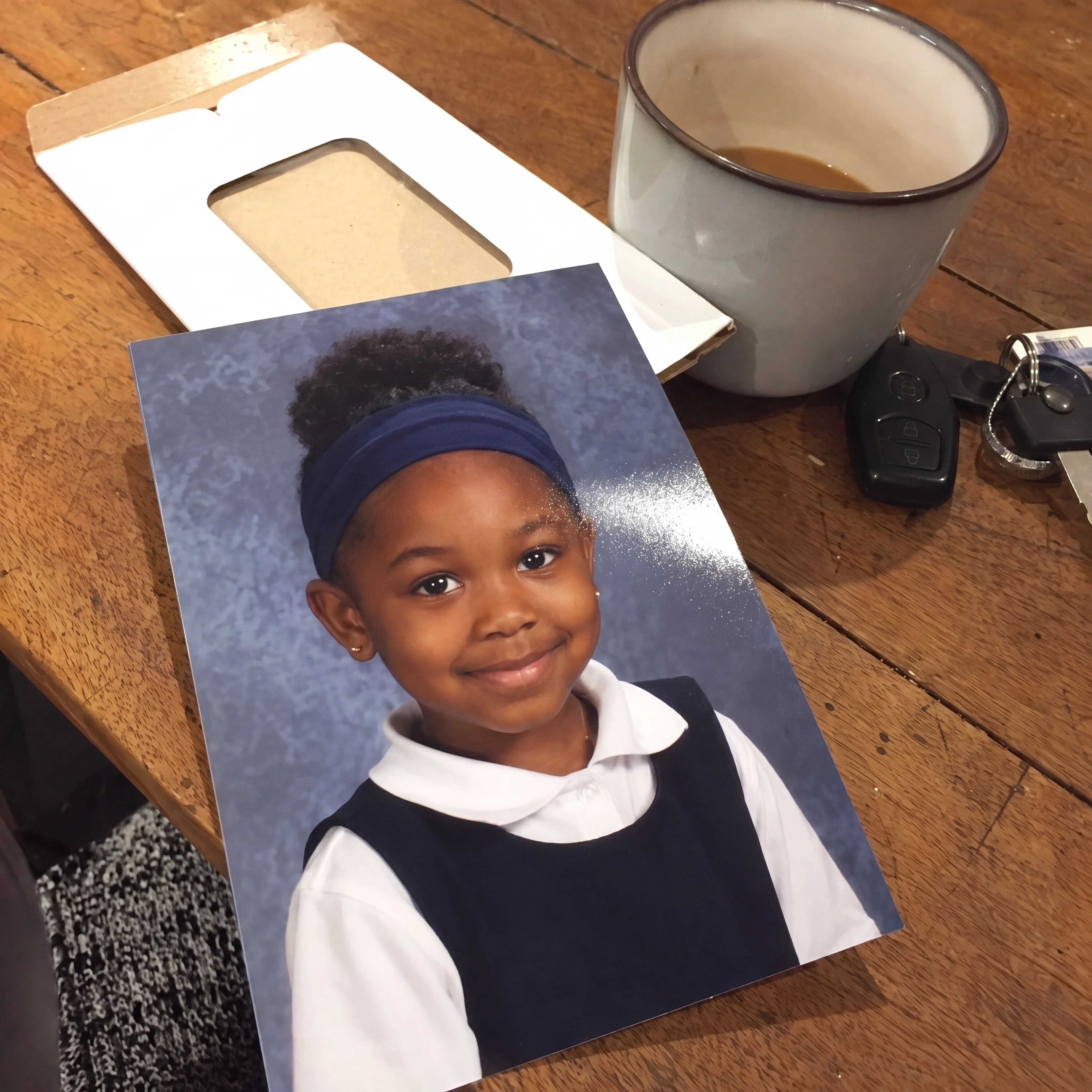
But her little girl was quiet in the back seat. Something was bothering her.
Halfway to school, Andrea glanced in the mirror and saw she'd swapped the bow for a headband - pulled low, over her hairline.
She asked her why.
"The other girls in my class don't have bald spots like mine."
She's six.
Andrea held it together. Through drop-off. Through "have a good day." Through the wave at the gate.
Then she got back in the car, shut the door, and broke.
Because it wasn't just her hair anymore. It was her daughter's.
And she couldn't shake the one question no oil, no style, no scarf could answer: had she failed her own little girl?
Two weeks of softer hair. Then right back to square one.
At home, nine half-used bottles lined the bathroom cabinet.
Castor oil. Rosemary oil. Two growth serums. A biotin supplement she'd quietly given up on.
Nine bottles.
Her hair looked exactly the same as it did before the first one.
Her edges looked fuller than they had in the ten years she'd known her.
She asked what she'd changed.
Michelle reached into her bag, set two jars of batana on the table, and said: "Guess which one's the real one."
Andrea got it wrong.
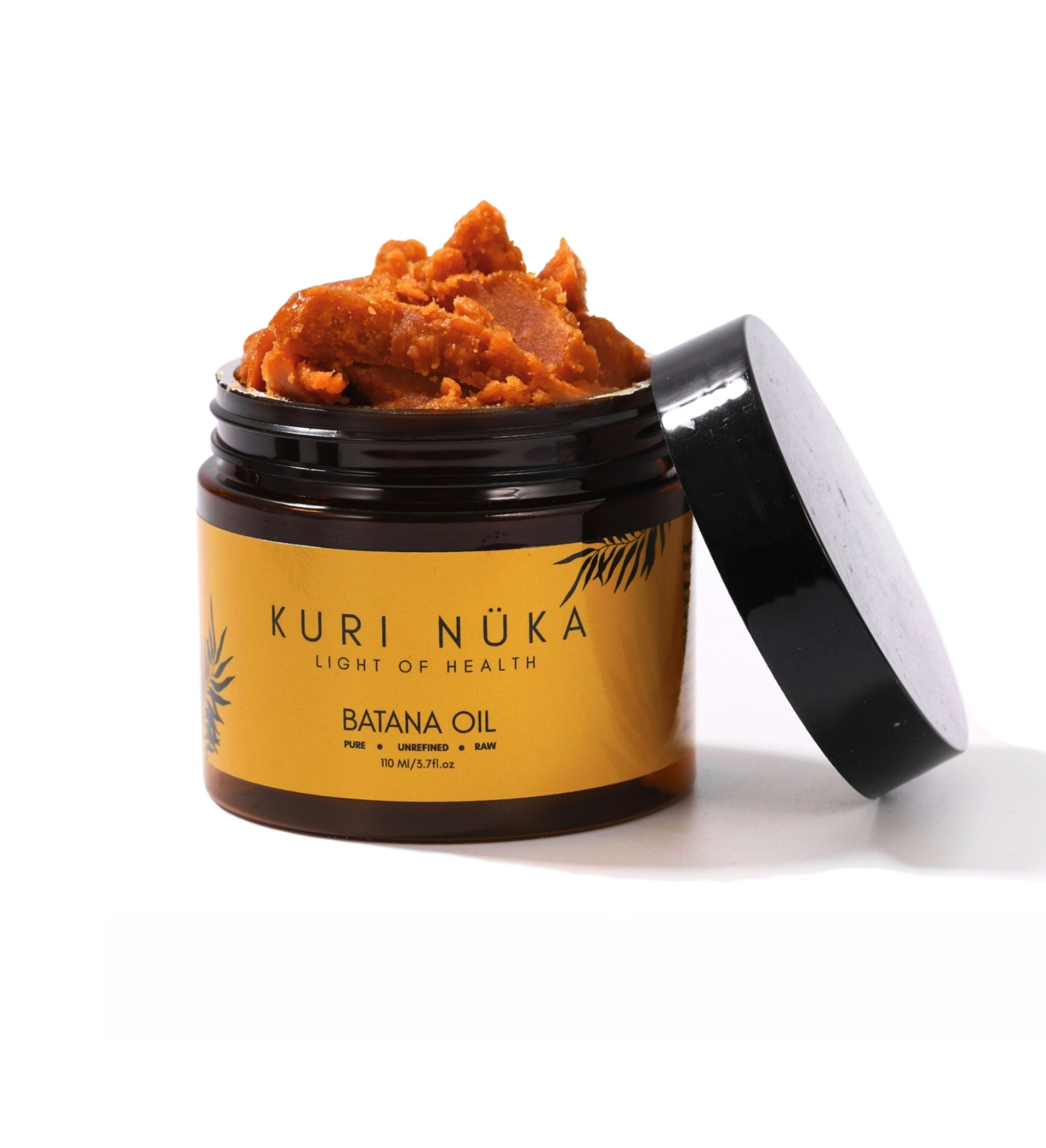
The jar she picked stayed thick and creamy - like cheap moisturiser. The other melted the second Michelle's warm hand closed around it. Smooth. Even. The way real oil is supposed to behave.
"It was never your hair, Andrea. It was what was in the jar."
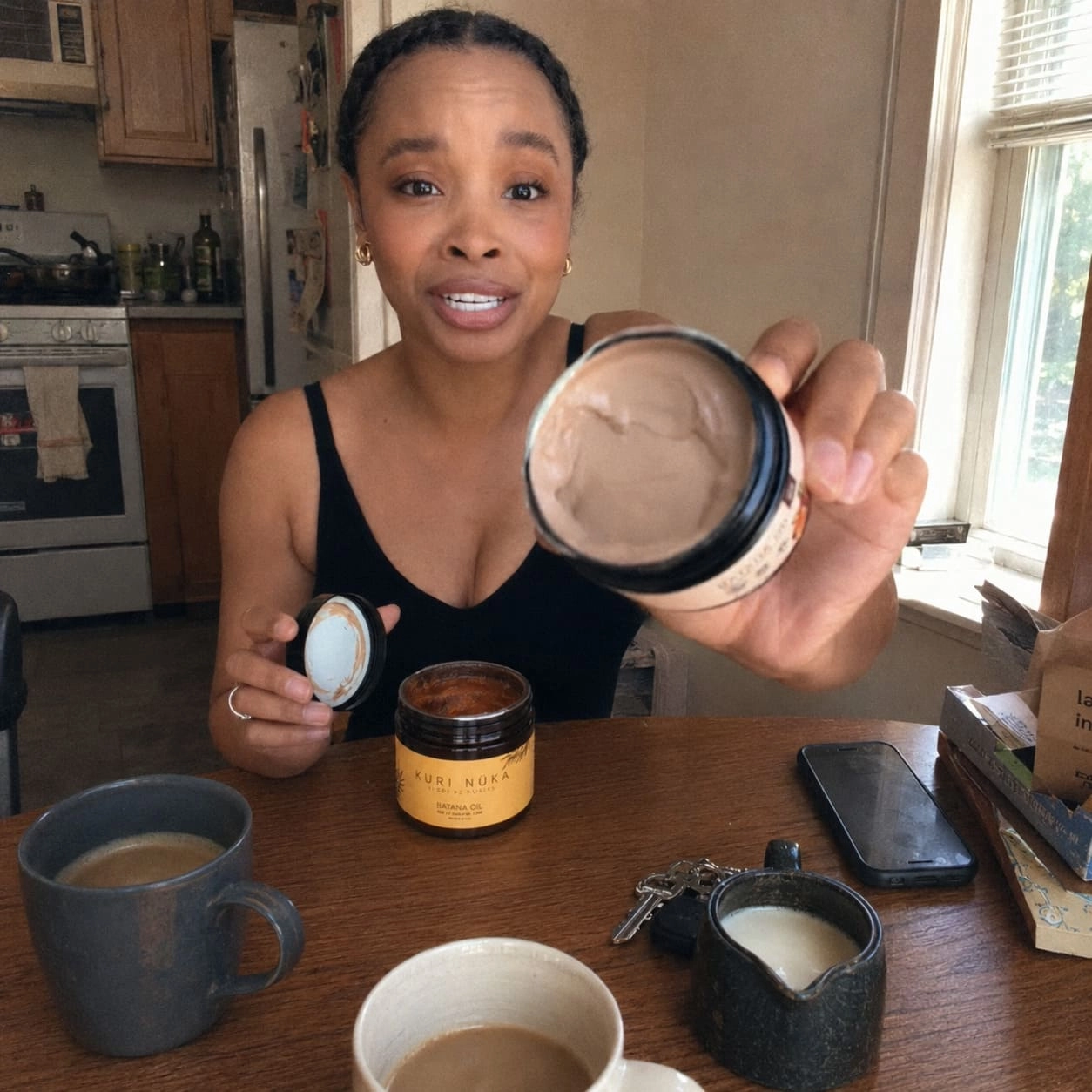
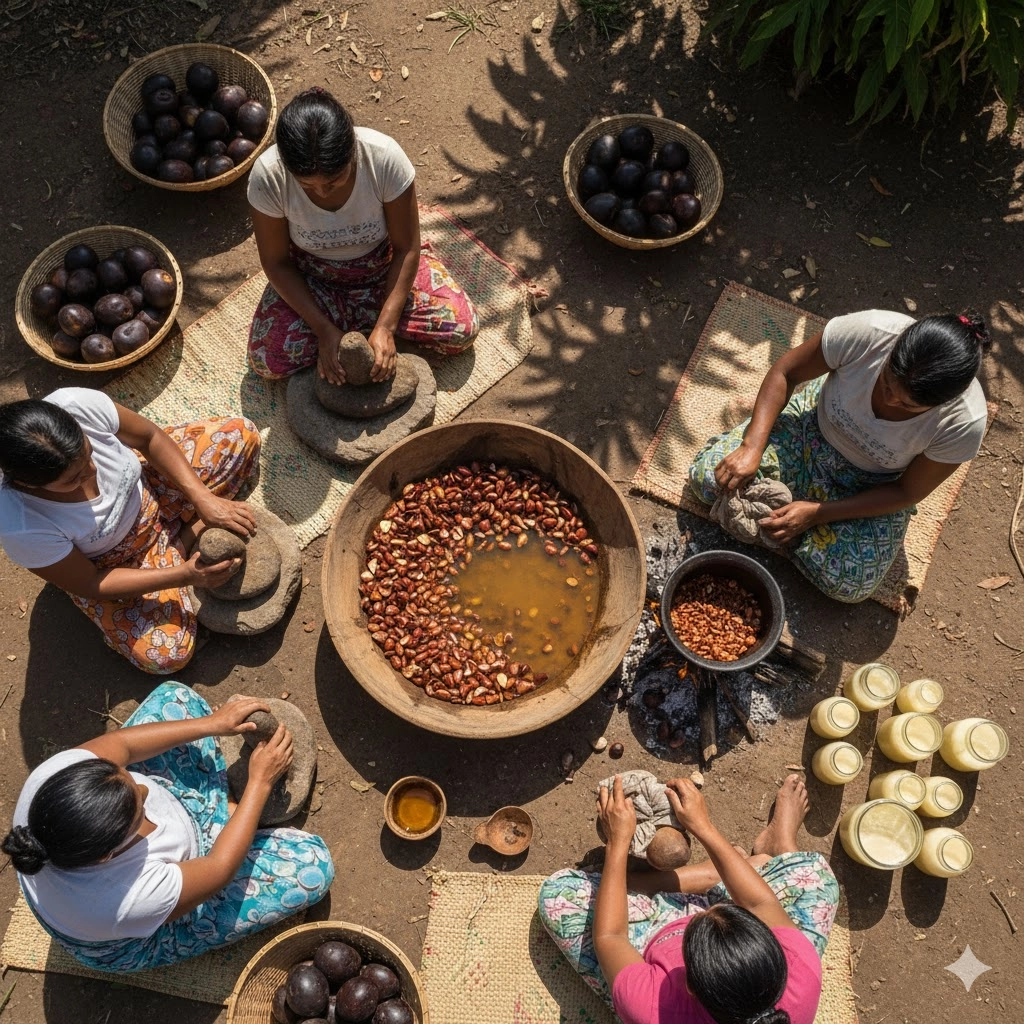
Real batana is rare, and slow to hand-harvest. So most of what's sold online isn't really batana at all.
It's a cheap imitation - reverse-engineered to smell like the real thing, then watered down and cut with synthetic oils and fillers.
"Batana is unlike most of what's on the shelf. It's exceptionally rich in fatty acids, and because it's so light, it absorbs into the hair and scalp instead of just coating the surface - which is why hair tends to feel noticeably softer, more moisturized and easier to manage."
So the oil sits on top doing nothing - while you go on blaming your hair type for a problem that was never yours.
Real batana does the opposite. One pure, unrefined ingredient. Light enough to sink into the coil and feed the follicle the way your scalp's own oils are meant to.
There's even a simple way to spot it - the one Michelle showed Andrea. Real batana is firm in the jar and melts the second it meets the warmth of your skin. The fakes stay thick and creamy, like lotion. Because they were never batana to begin with.
Michelle's jar was the real thing. Pure, unrefined, hand-harvested by the Miskito people of La Moskitia, who've used it for generations.
That's the only reason it worked when nothing else had.
That's the whole routine - a little worked into her scalp before bed. No steam cap. No ten steps.
Four months on, her arms don't ache after wash day. Her edges are the fullest they've been in years.
She's stopped angling her head in photos.
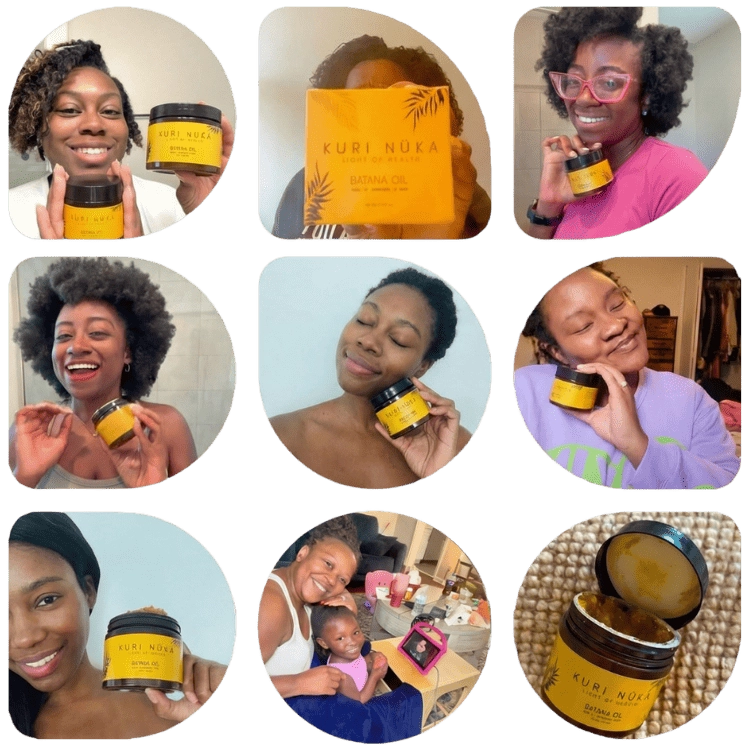
And she wasn't a one-off. In the brand's own 60-day test on 144 women, the same changes kept turning up - less shedding, better moisture, baby hairs along the edges.*
She paid £120 for a treatment that lasted a fortnight. A jar of the real thing costs a small fraction of that - and right now it's buy one, get one free, so Michelle's jar effectively cost her nothing to try.
Every order's backed by a 60-day guarantee. Don't see a difference, get every penny back.
It was never her hair. It was never her genetics.
It was only ever the oil in the jar.
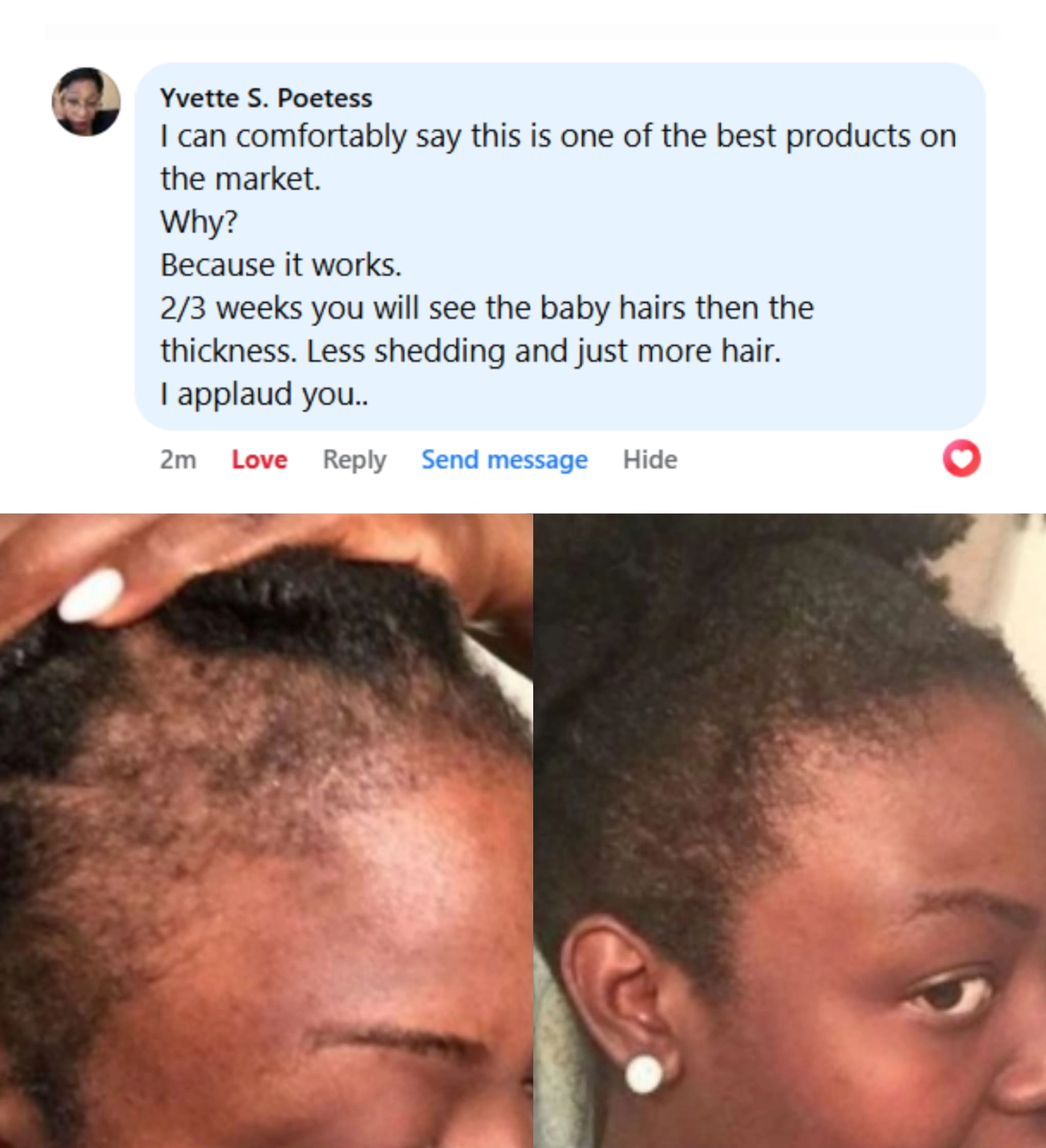
Diluted copies. Synthetic knock-offs. Half-batana cut with cheap filler oil.
They look identical on the listing. You've no way to tell until it's already on your hair, doing nothing.
Kuri Nüka is sold direct, nowhere else - every jar pure, unrefined, and traceable straight back to La Moskitia.
It's the only way to know the jar in your hands is the real thing.
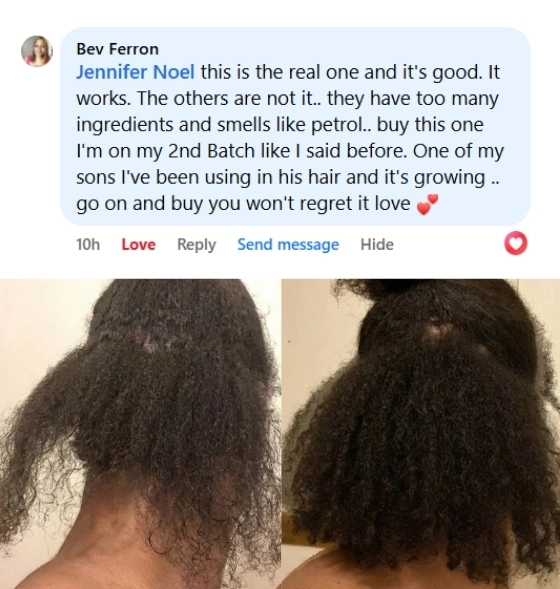
For years my hair just stopped at one length and I'd given up. These photos are a few months apart - it's longer and thicker than it's been in ages. And it's the real batana, not the watered-down copies.
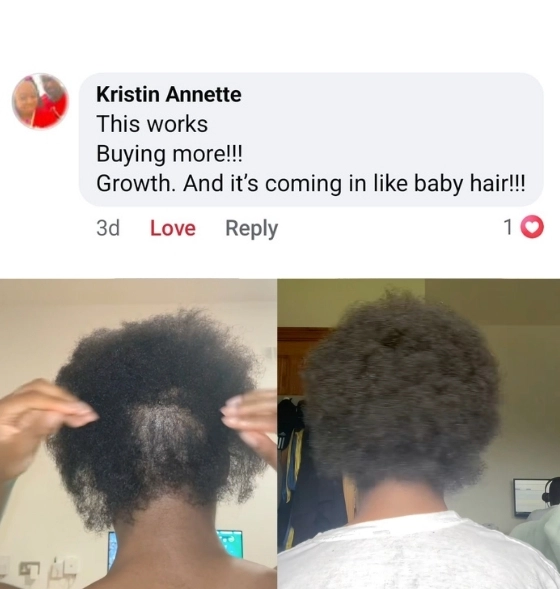
I spent a fortune on serums that did nothing for my postpartum shedding. A month on this Honduran oil and the baby hairs are coming in everywhere - my whole head feels fuller. Wash day's actually peaceful now.
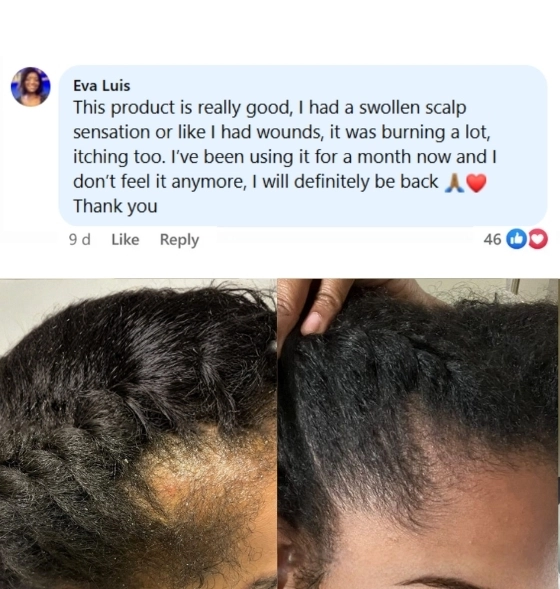
My scalp used to itch and burn constantly, and I had a thin bare patch I hid every day. A month in, the irritation's gone and the patch is finally filling back in. I didn't think anything would work.
The same jar is available now - the real, unrefined thing, straight from Honduras, and sold nowhere but here.
Right now it's buy one, get one free, backed by a 60-day money-back guarantee. Don't see a difference, get every penny back.
You don't need four more months to stop guessing.